Bathroom Extractor Fan Problems: A UK Troubleshooting Guide
If your bathroom extractor fan has stopped working, become noisy, or no longer clears steam, this guide explains the common causes, the checks you can do safely, and when replacement is likely to make more sense than repair.
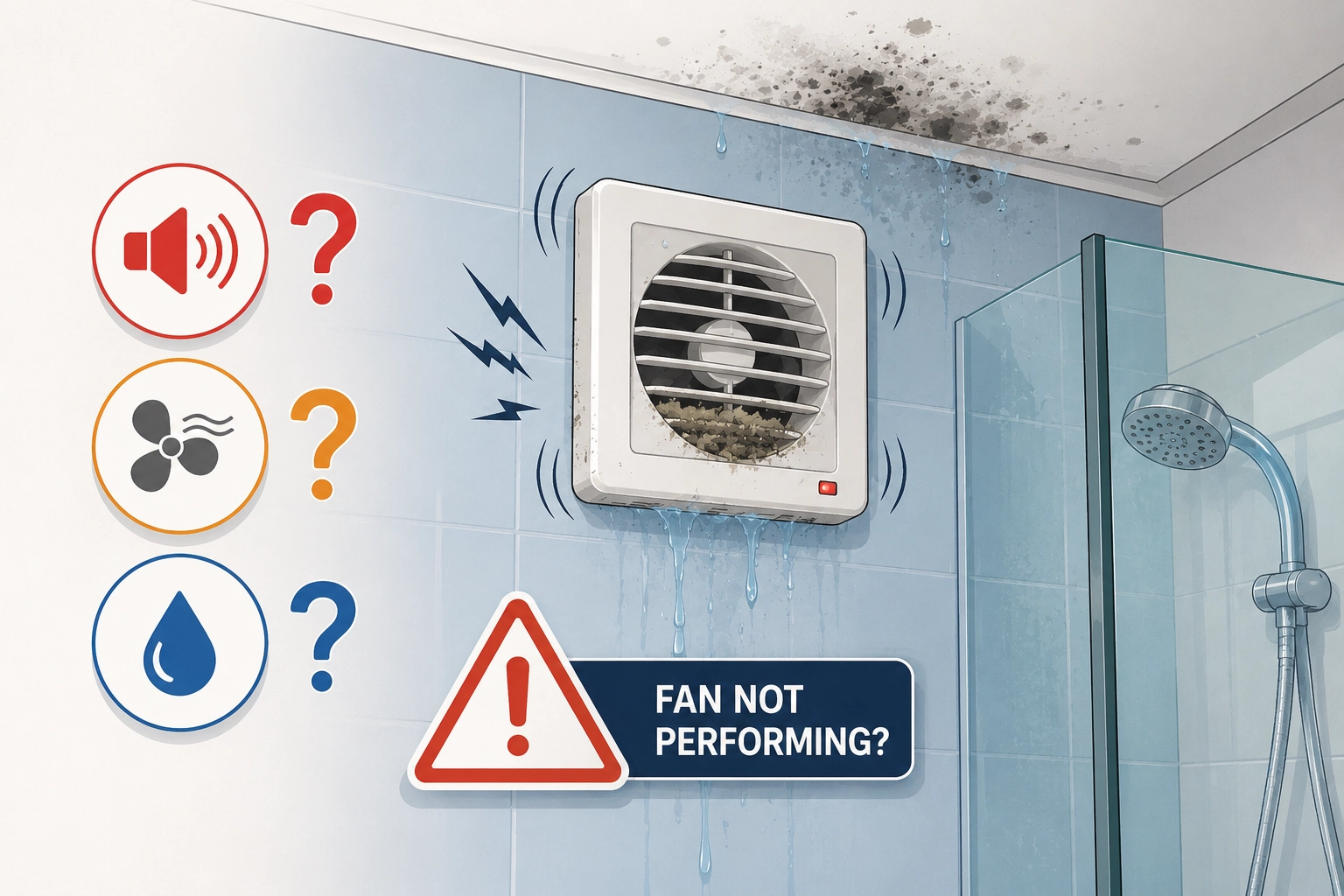
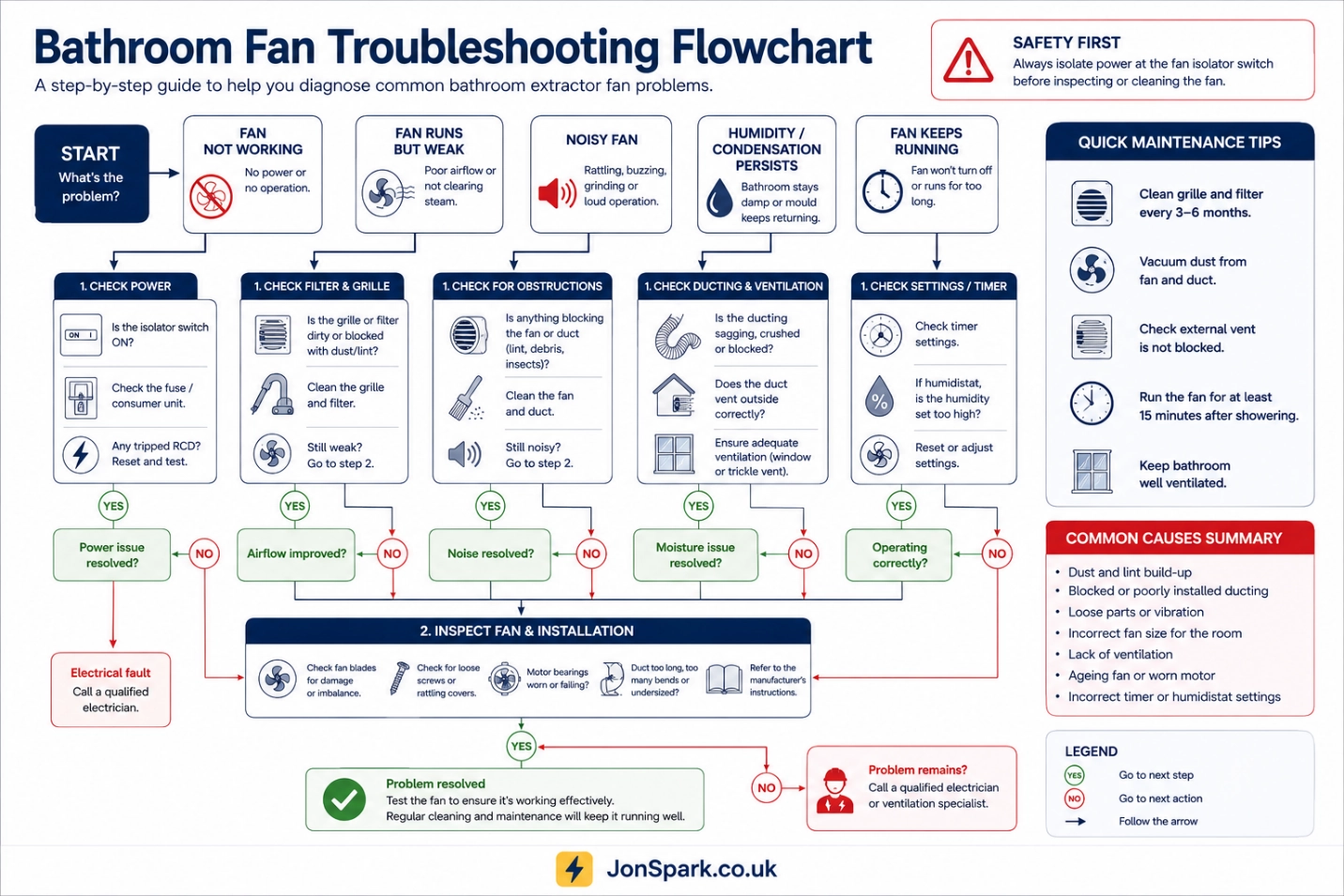
If your bathroom fan is dead, check whether any obvious fan isolator or control has been turned off. It is best to leave the cover and wiring alone unless the power has been safely isolated and checked. If the fan runs but does not clear steam, the issue is often dust build-up, restricted ducting, weak airflow, a blocked outside vent, or a fan that is too small for the room.
If there is a burning smell, buzzing, intermittent operation or signs of electrical failure, the sensible next step is to get advice rather than keep testing it.
Is the bathroom fan completely dead?
If the fan makes no sound and the blades do not move, the problem is usually one of four things: the fan has been switched off at an isolator or control, the fan is not receiving power, the motor has failed, or the internal timer or humidity controls have failed.
Some fans are basic on/off units. Others have timers, humidity sensors, or extra wiring for run-on features, so a dead fan is not always a simple visual swap.
One of the first things I ask is whether the fan has ever worked, whether it stopped suddenly, whether any fan isolator has been switched off, whether it comes on with the light, and whether it used to run on after the light went off. That history helps narrow the problem before anyone starts guessing at parts.
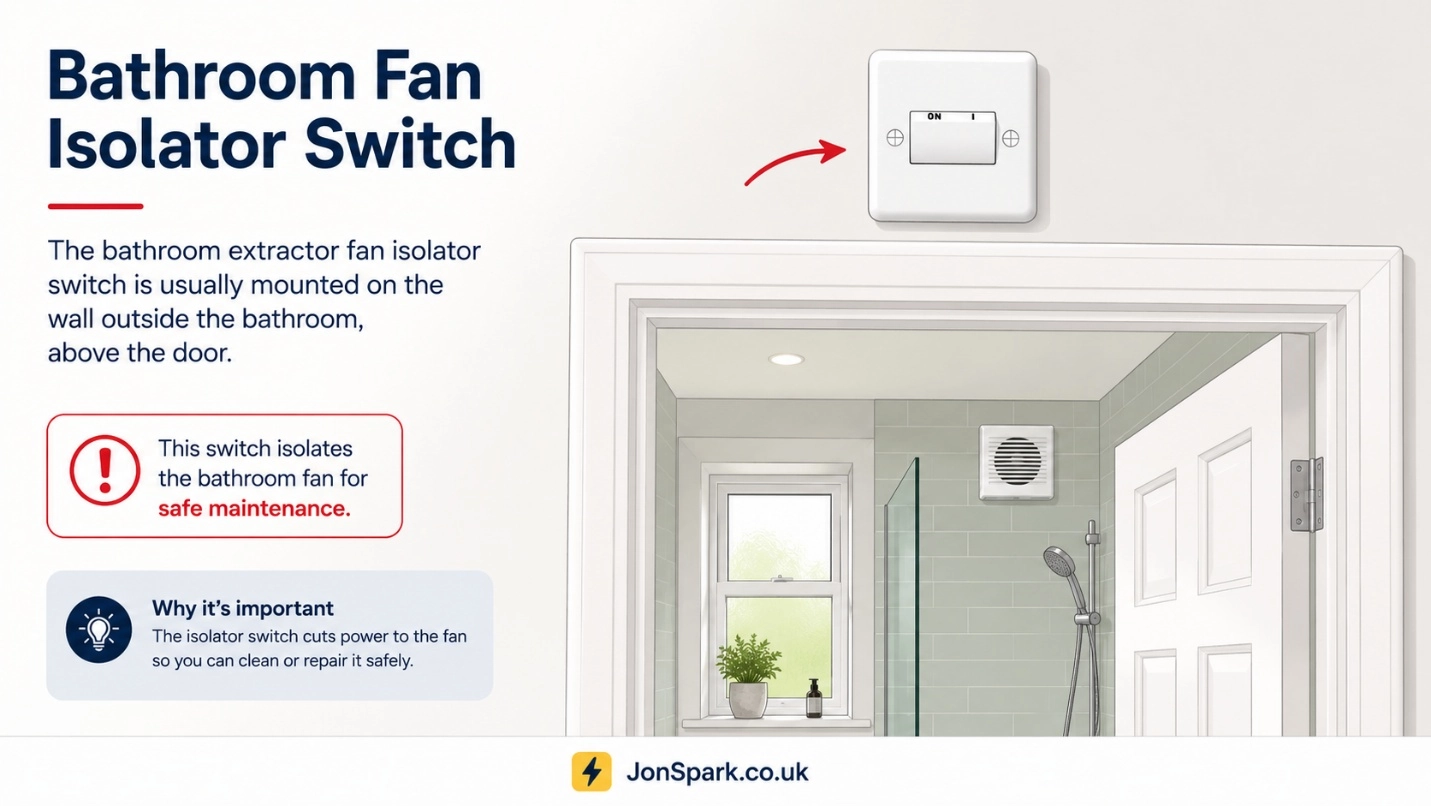
It is best to leave the fan cover and wiring alone unless the power has been safely isolated and the absence of voltage has been verified. Bathrooms need particular care because water and electricity are close together. Electrical Safety First has a useful overview of extractor fan safety.
Is the fan running but not removing steam?
This is one of the most common bathroom fan problems. The fan sounds like it is working, but the mirror stays steamed up, condensation remains on the window, and the room feels damp after a shower.
In this situation, the fan may not be broken. It may simply be unable to move enough air.
Common causes include:
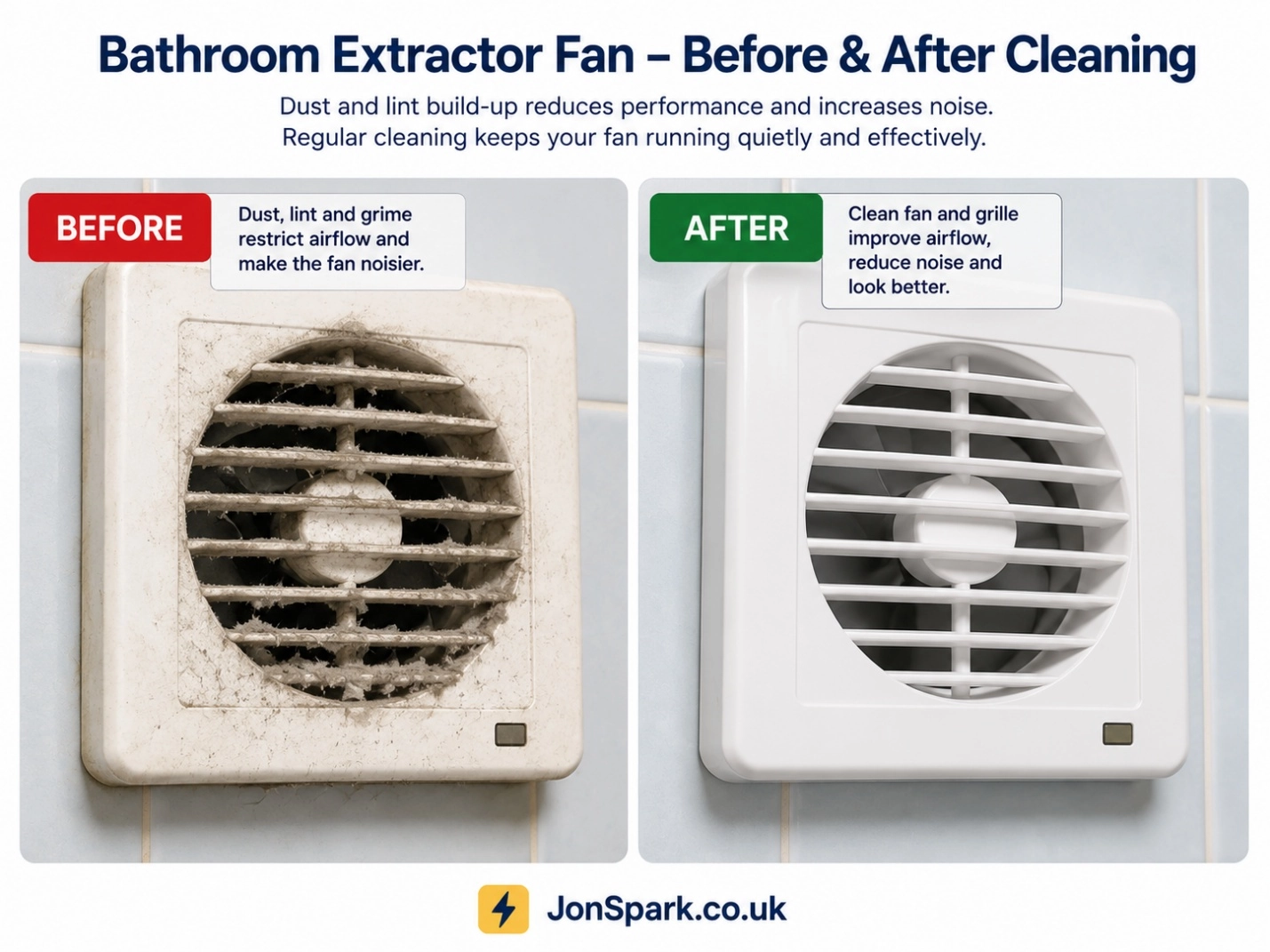
- Dust on the grille and fan blades.
- A blocked external vent.
- Crushed or sagging ducting.
- A fan that is too small for the bathroom.
- Poor airflow into the room.
- An older fan losing performance.
The usual description is: "The fan is running, but the bathroom still stays wet." That is a useful clue, because it points away from a simple on/off fault and towards airflow, ducting, sizing or build-up inside the fan.
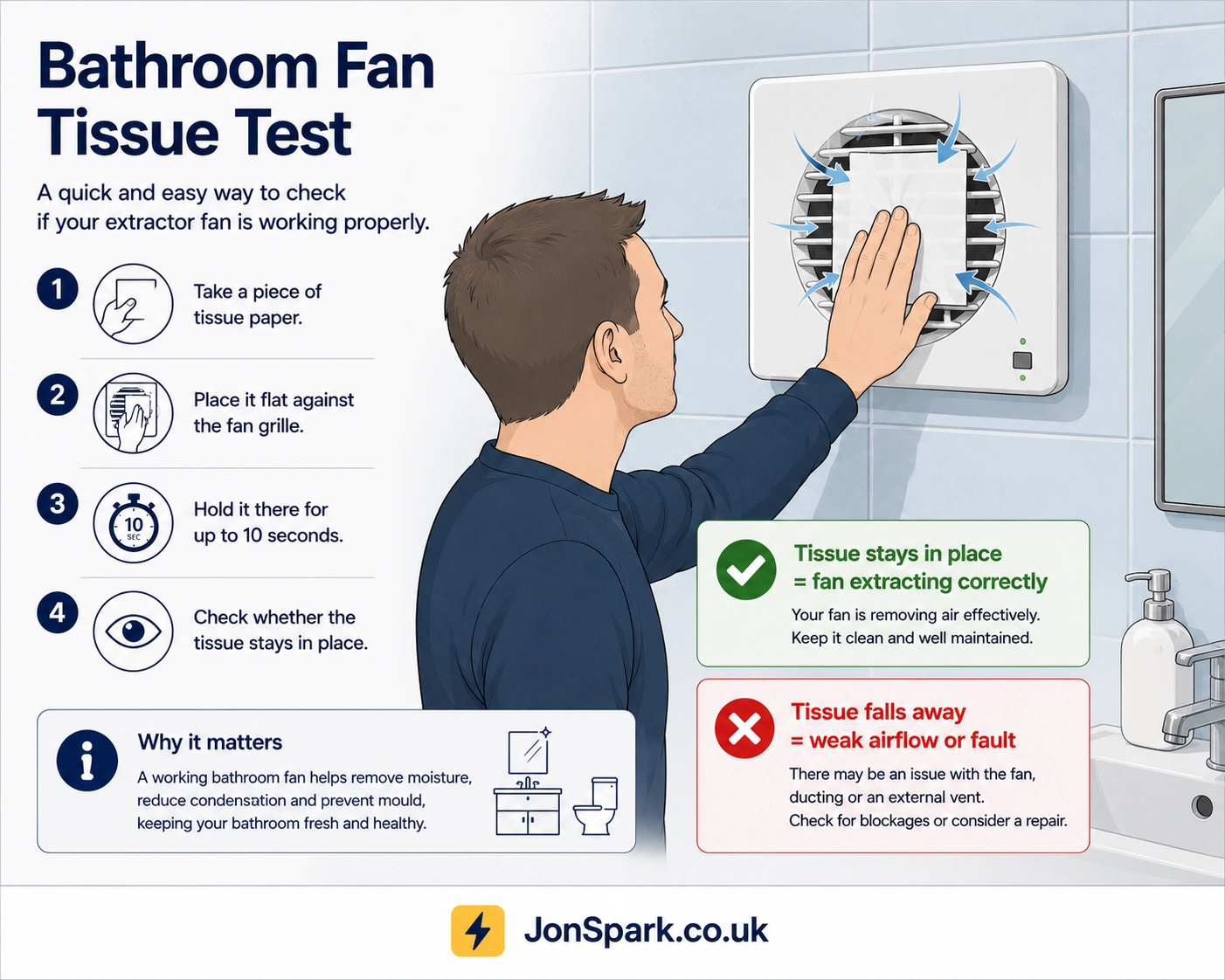
Try the tissue paper test
A simple check is the tissue paper test. Turn the fan on and hold a single piece of toilet tissue against the grille. If the fan is pulling properly, the tissue should stay against the grille. If it falls away, the fan may have weak airflow.
This is not a professional airflow test, but it is a useful first check.
Could blocked ducting be stopping the fan from working properly?
Yes. A bathroom fan can only extract air if the ducting gives that air a clear route outside. Poor ducting can make even a new fan perform badly.
Common ducting problems include:
- Flexible ducting crushed above the ceiling.
- Long duct runs with too many bends.
- Sagging ducting holding condensation.
- Blocked external grilles.
- Air being discharged into a loft instead of outside.
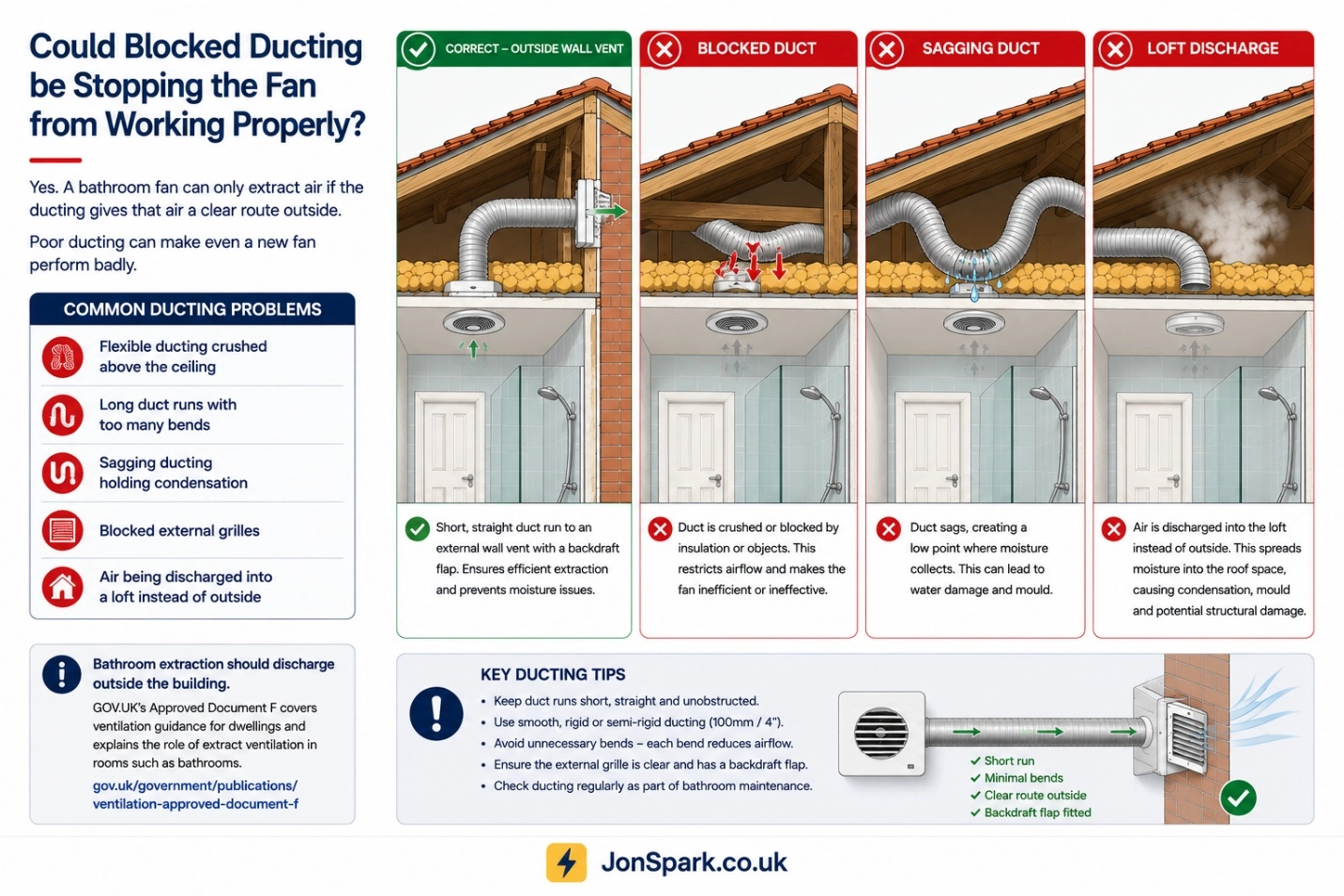
Bathroom extraction should discharge outside the building. GOV.UK's Approved Document F covers ventilation guidance for dwellings and the role of extract ventilation in rooms such as bathrooms.
A new fan can still perform badly if the duct is crushed, sagging, too long, badly routed or blocked at the outside grille. That is why I prefer to check the route the air is taking, not just swap the visible fan and hope the condensation problem disappears.
Is the bathroom extractor fan noisy?
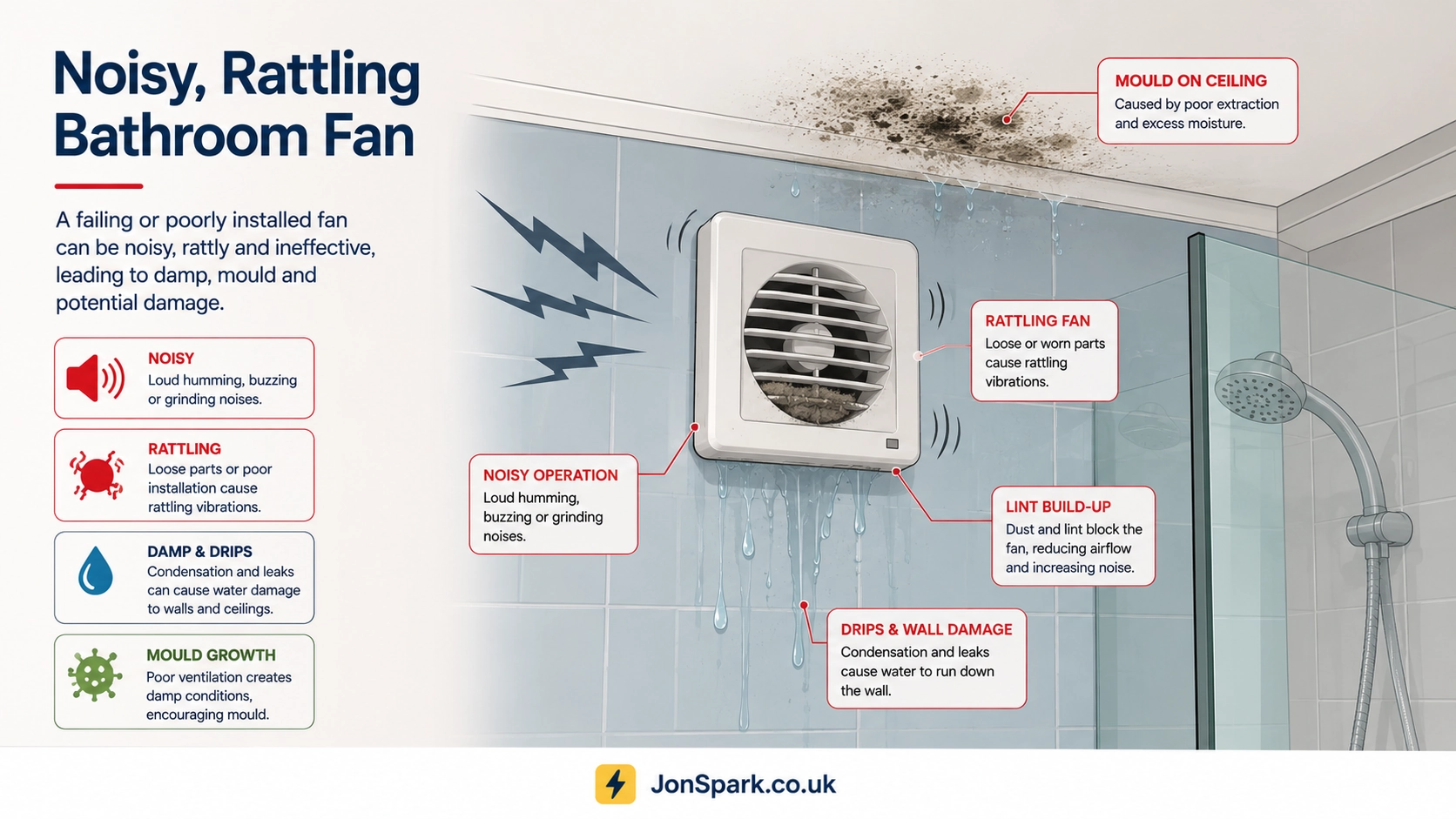
A noisy fan often means the fan is ageing, dirty or mechanically worn. Different noises can suggest different problems.
| Noise | Possible cause |
|---|---|
| Grinding | Worn bearings or motor wear. |
| Buzzing | Motor struggling or an electrical issue. |
| Rattling | Loose cover, loose fixing or debris. |
| High-pitched whine | Ageing motor or a poor-quality fan. |
| Sudden loud noise | Loose part or damaged blade. |
A fan that has gradually become louder over time is often nearing the end of its useful life. Many older fans are noticeably louder than modern replacements, although actual noise depends on the fan model, ducting and installation.
People often put up with a noisy fan for months because it still "works". By the time it is grinding, rattling or waking people at night, replacement is often more sensible than spending time chasing a worn motor or bearing.
Can a faulty bathroom fan cause mould?
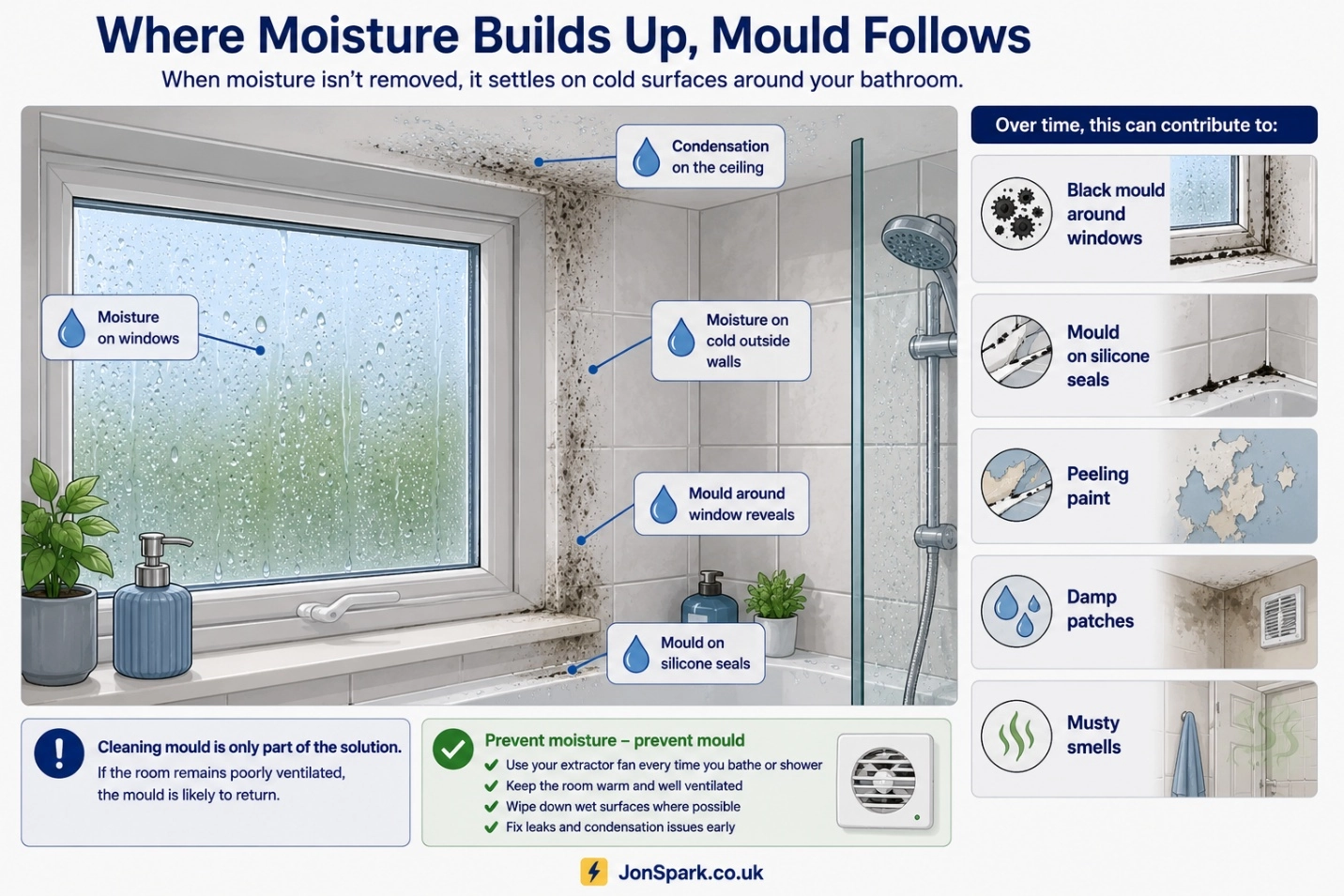
A faulty fan does not directly create mould, but poor ventilation can allow moisture to remain in the room for too long. Showers, baths, wet towels, damp surfaces and poorly dried grout all add moisture to the air.
When that moisture is not removed, it can settle on cold surfaces such as windows, ceilings, outside walls and silicone seals. Over time, this can contribute to black mould, peeling paint, damp patches and musty smells.
When mould is showing near the ceiling, window reveal or silicone line, the story is often bigger than the fan unit itself. The room may need better extraction, a clearer duct route, more run-on time, or simply a fan that is better matched to the way the bathroom is used.
How long should a bathroom extractor fan last?
Many domestic bathroom extractor fans last around 8 to 15 years, depending on quality, installation, frequency of use, humidity levels and maintenance.
A fan may need replacing sooner if it runs every day in a busy family bathroom, has never been cleaned, is exposed to heavy steam, has poor ducting, is a low-cost older model, or the motor has become noisy.
A fan over 10 years old that is already noisy, weak or unreliable is often better replaced than repeatedly investigated.
Can you clean a bathroom extractor fan yourself?
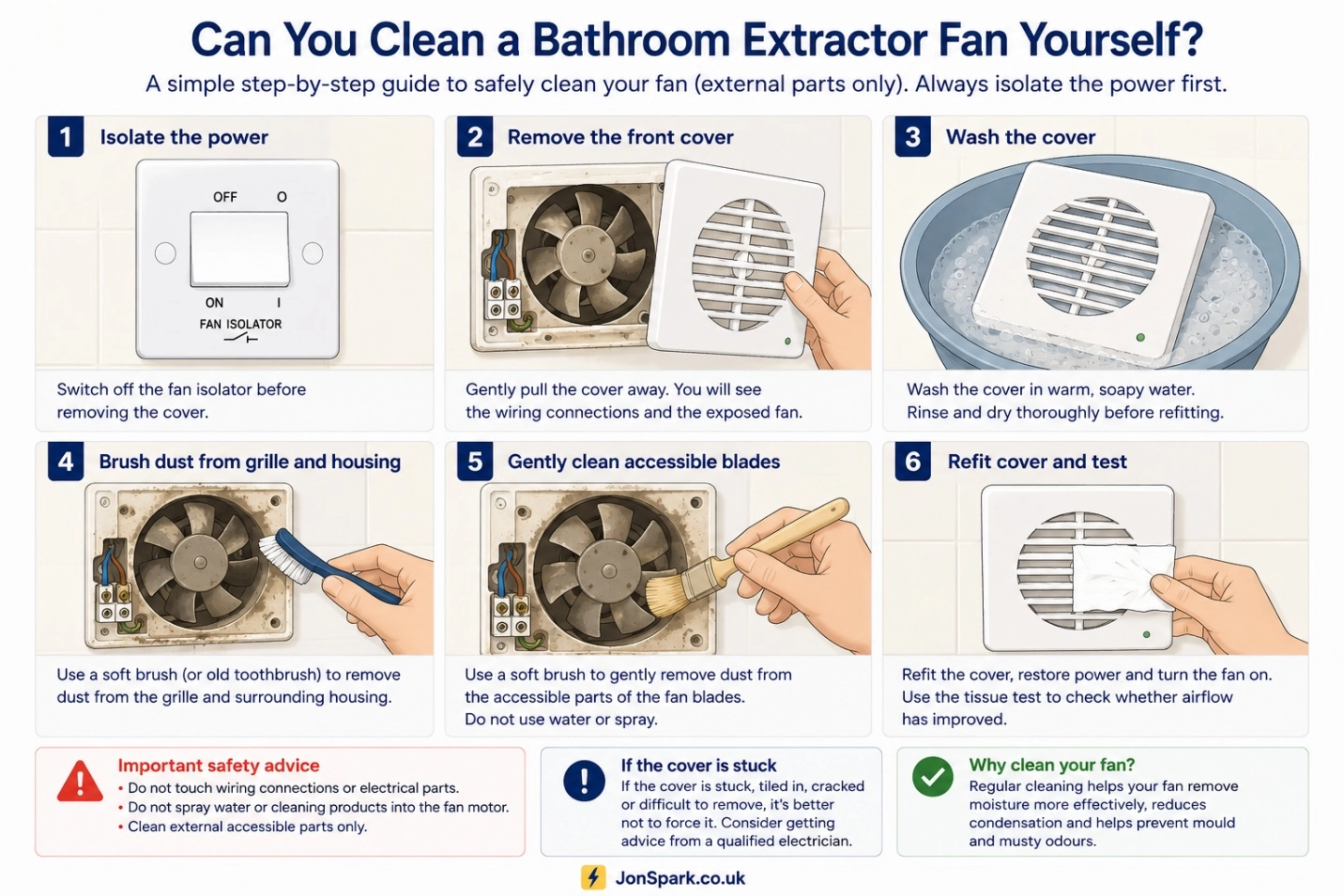
In many cases, yes, but only after the power has been safely isolated. A basic clean usually involves removing the front cover, washing the cover, brushing dust from the grille, gently clearing accessible dust from the fan blades and checking whether airflow improves afterwards.
Keep water and cleaning products away from the fan motor and electrical parts. If the cover is stuck, tiled in, cracked or difficult to remove, it is better to leave it rather than force it.
What we commonly see in local homes
In homes around Keynsham, Bristol and Bath, the fan itself is not always the first problem. A common pattern is that the fan still spins, it seems like it is working, steam remains after showers, and mould starts appearing near windows or ceilings.
On inspection, the fan is often clogged with dust, the external vent is blocked, or the ducting route is poor. This is why diagnosis matters: replacing the fan without checking ducting and airflow can leave the same condensation problem afterwards.
The best result is not just a new white grille on the wall. It is a bathroom that clears steam better, a fan that is not annoying to live with, and no nasty surprise where the old unit has been tiled in or the ducting disappears somewhere unhelpful.
Should you repair or replace a bathroom extractor fan?
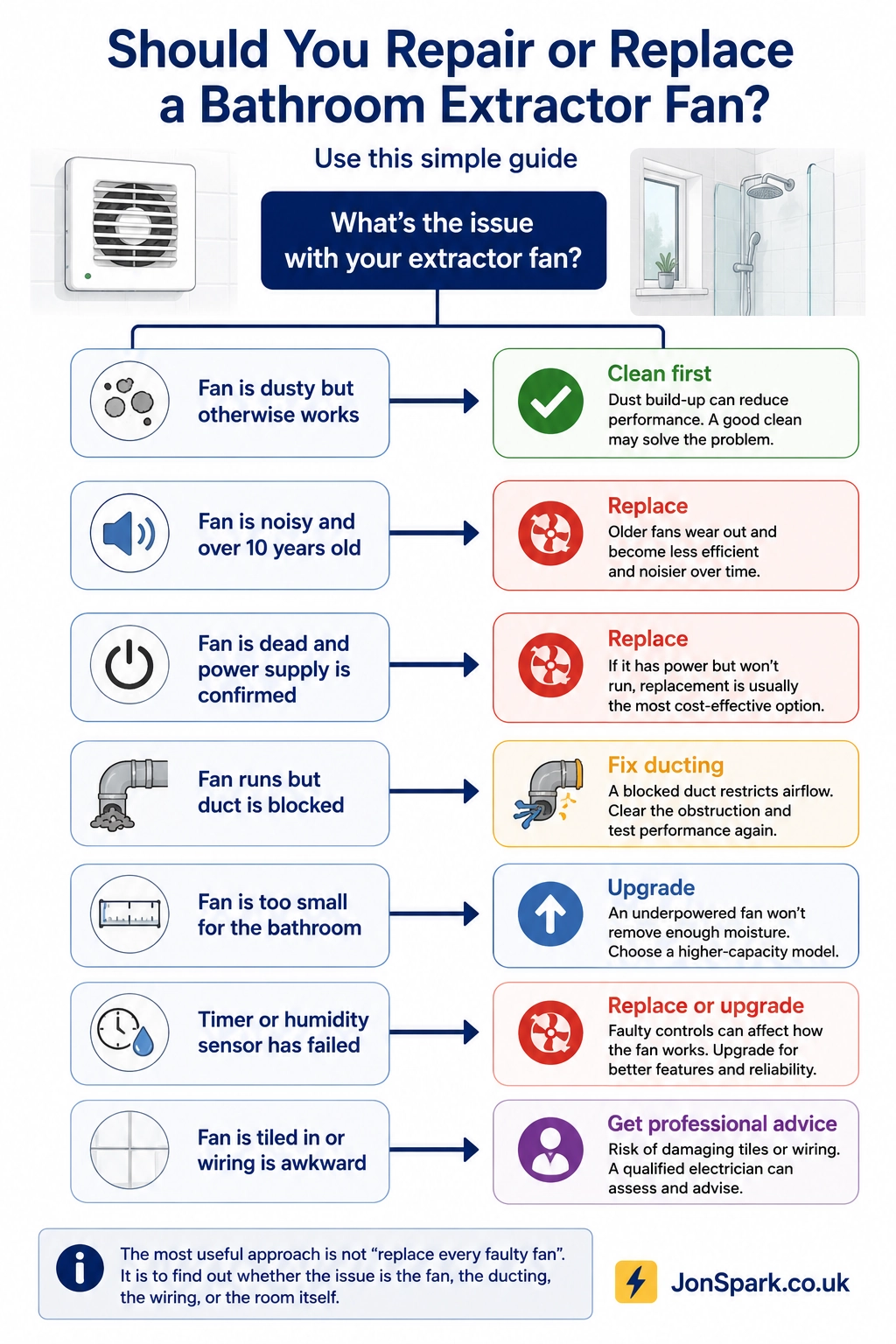
The most useful approach is not "replace every faulty fan". It is to find out whether the issue is the fan, ducting, wiring or the room itself.
| Situation | Usually better option |
|---|---|
| Fan is dusty but otherwise works | Clean first. |
| Fan is noisy and over 10 years old | Replace. |
| Fan is dead and power supply is confirmed | Replace. |
| Fan runs but duct is blocked | Fix ducting. |
| Fan is too small for the bathroom | Upgrade. |
| Timer or humidity sensor has failed | Replace or upgrade. |
| Fan is tiled in or wiring is awkward | Get professional advice. |
Should a bathroom fan vent into the loft?
No. A bathroom extractor fan should discharge moist air outside the building. If warm, damp bathroom air is pumped into a loft, the moisture has left the bathroom but not the property.
Over time, this can contribute to damp insulation, water droplets on roof felt, timber decay, mould growth and reduced insulation performance.

Can you replace a bathroom extractor fan yourself?
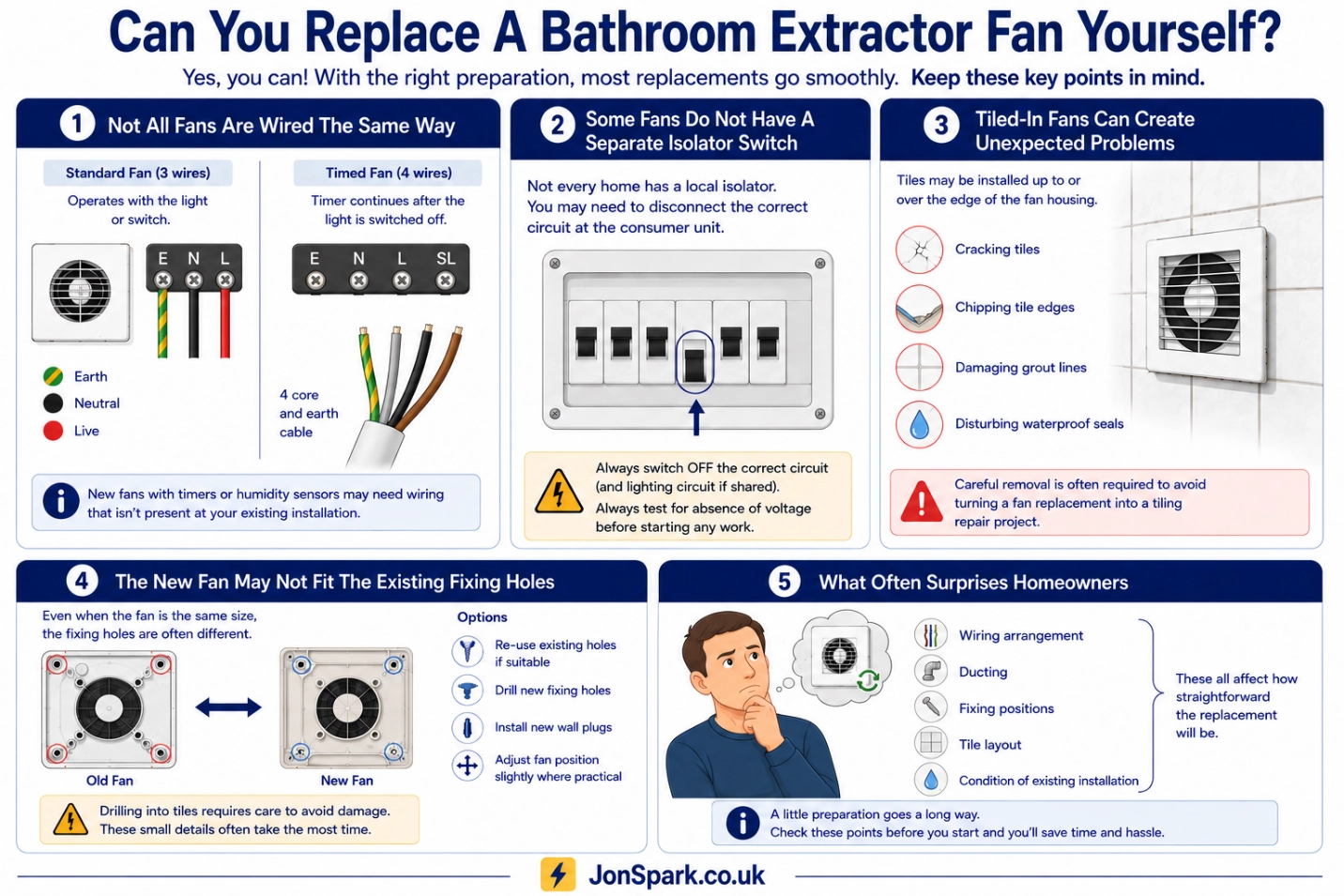
It is easy to assume replacing a bathroom extractor fan is simply a case of removing the old unit and fitting a new one. Sometimes it looks straightforward, but several practical issues can make replacement more complicated than expected.
The awkward bits are usually discovered after the cover comes off: different wiring terminals, brittle plastic, damaged fixings, a hole that does not match the new fan, or tiles fitted tight around the old unit.
Not all bathroom fans are wired the same way
Basic fans, timer fans and humidity-sensing fans can have different wiring requirements. A replacement fan may include features that the existing setup does not support, so it is worth checking the model and wiring arrangement before assuming any fan will fit.
Tiled-in fans can create unexpected problems
In some bathrooms, tiles have been installed up to, or partly over, the fan housing. Removing the old fan can risk cracked tiles, chipped edges, damaged grout lines or disturbed seals.
What size bathroom extractor fan do you need?
Some extraction problems are caused not by failure, but by poor sizing. The fan is simply unable to keep up with the amount of moisture being generated.
Approved Document F gives minimum intermittent extract rates for rooms including bathrooms, utility rooms and kitchens. These are minimum rates rather than a guarantee that every real-world installation will perform well.
The label on the box is only part of the story. A fan that looks good on paper can disappoint if it is connected to a long flexible duct with bends, or if the room has no easy way for replacement air to enter while the fan is running.
| Room type | Minimum intermittent extract rate |
|---|---|
| Bathroom | 15 litres per second. |
| Utility room | 30 litres per second. |
| Kitchen | 30 to 60 litres per second, depending on location and setup. |
Bigger is not always better. Duct length, duct diameter, bends, noise levels and installation quality all affect real-world performance.
How much does bathroom extractor fan replacement cost?
Costs vary because fan type, existing wiring, ducting condition, accessibility, loft work and tiled-in units can all change the job. For Jon Spark, extractor fan replacement is listed as a total labour price of £85-£135, depending on the specific job. Parts are separate.
The quickest way to get a useful estimate is to send photos of the fan, the bathroom layout, any outside vent you can see, and your postcode.
The most useful photos are the fan grille, the outside vent if you can see it, the bathroom layout, and anything unusual such as tiling tight around the fan. Those details often tell me whether it looks like a straightforward swap or something that needs more care.
Frequently asked questions
Why is my bathroom fan not turning on?
It may be switched off at the fan isolator, have no power, have a failed motor, have a failed timer or humidity control, or have a wider electrical fault. If other bathroom electrics are also affected, the issue may be wider than the fan.
Why is my fan spinning but not clearing steam?
This usually means airflow is restricted. Dust, blocked ducting, a blocked outside vent or an undersized fan are common causes.
Is it bad if my bathroom fan vents into the loft?
Yes. Moist air should discharge outside the property, not into a loft space.
How often should I clean my bathroom fan?
For most homes, checking it every six months is sensible. Busy bathrooms may need more frequent cleaning.
Why is my bathroom mirror still steaming up?
This often indicates insufficient extraction, restricted airflow or an undersized fan.
Can a bathroom fan reduce mould?
Yes. Effective ventilation helps remove moisture that mould relies on.
Why does my fan make a grinding noise?
Grinding often suggests worn bearings or motor wear.
Sources referenced
About Jon Spark
Jon Spark is the trading name of Jonathan Jensen, a sole trader providing minor domestic electrical work across Keynsham and nearby areas. The service focuses on practical small jobs such as bathroom extractor fan replacements, light fittings, sockets and switches, pull-cords, smoke and heat alarm replacements, and minor fault finding.
These Insights articles are written to help people understand common small electrical jobs before they book, including what information is useful to send and when a job may need a different route.
This article is provided for general guidance only. Every property and electrical installation is different. Electrical work can be hazardous if carried out incorrectly. If you are unsure about any aspect of an installation, consult a suitably qualified electrician.
Need help with a bathroom extractor fan in Keynsham, East Bristol or nearby Bath areas?
Send a couple of photos, your postcode and a short description of what is happening. I can usually tell whether it fits my small-job service and what the sensible next step is.