Socket & Light Switch Replacement Cost: UK Small-Job Guide
If you need a loose socket, cracked switch, tired faceplate or bathroom pull-cord replaced, the visible part is only half the story. The cost depends on the accessory, the back box, the existing wiring, access, and whether several small jobs can be grouped into one visit.
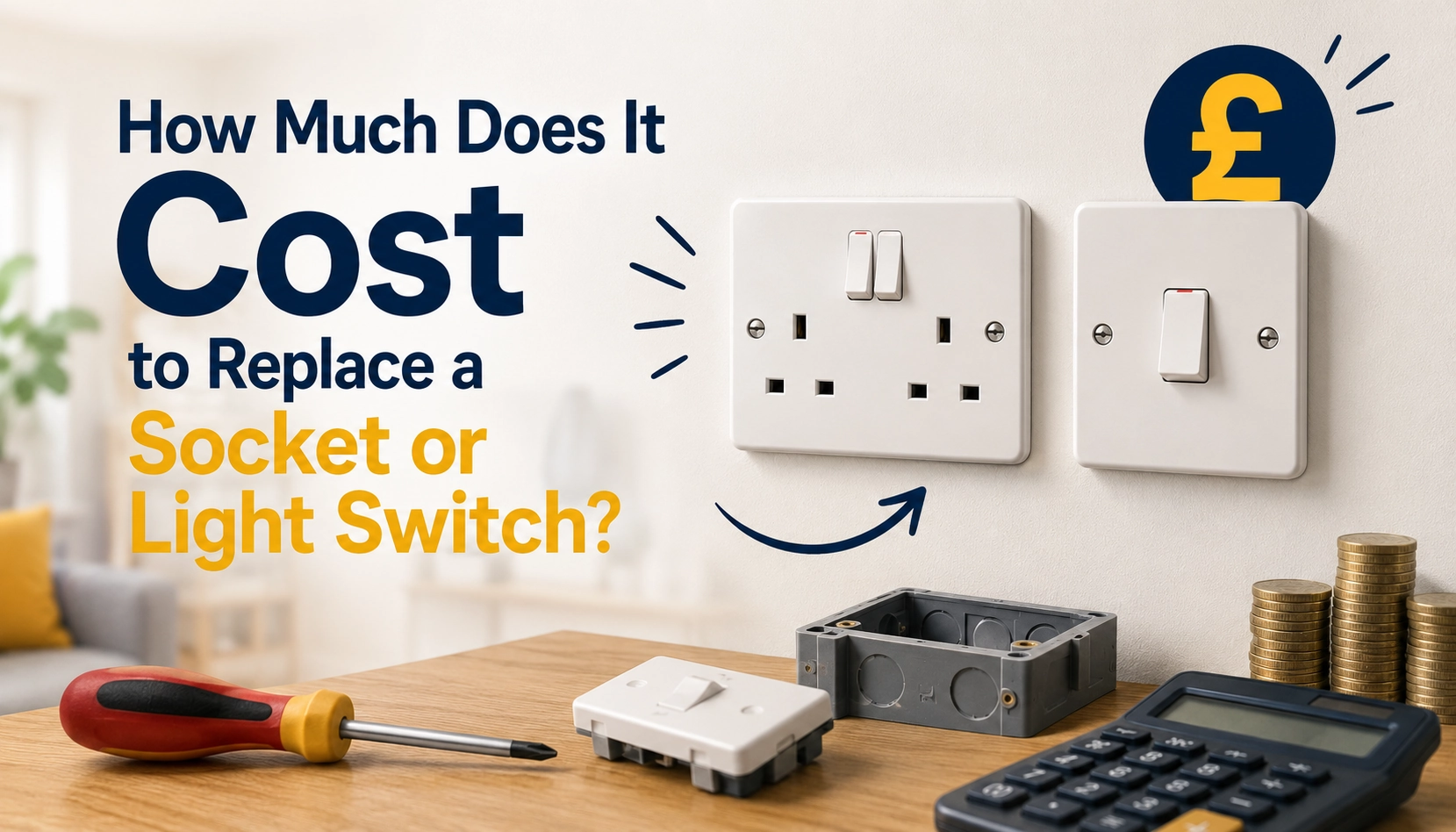
A straightforward socket, switch or faceplate replacement is often a small labour job when the existing wiring, back box and circuit are suitable. Jon Spark's minimum job price is currently £65, and extra simple items on the same visit are often much better value than booking one tiny job at a time.
Single-to-double socket conversions, decorative metal accessories, awkward walls and damaged wiring can change the price because they need more checking and care.
About this guide
Jon Spark carries out minor domestic electrical work in Keynsham and nearby areas, with a focus on practical small jobs many larger contractors do not prioritise: socket and switch replacements, faceplate swaps, single-to-double socket conversions where suitable, light fitting changes, pull-cord replacements and everyday fault finding.
This guide is based on day-to-day small-job experience, Jon Spark's published pricing approach, and the questions people ask before booking a visit.
Quick answer: what should you budget?
As a helpful local estimate, a straightforward socket, switch or faceplate replacement in the Keynsham area is often a relatively small labour job when the existing wiring, back box and circuit are suitable.
The value point is simple: one tiny item on its own can feel expensive because the visit still takes travel, setup, checking and tidy-up time. If you have a loose socket in the hallway, a cracked light switch upstairs and a dated faceplate in the kitchen, grouping them into one visit is usually more cost-effective.
The quickest-looking jobs are not always the quickest in practice. A painted-over screw, crumbling plasterboard, shallow metal back box or missing earth at a switch can change the job from a tidy swap into a proper judgement call.
What counts as a simple socket or switch replacement?
A simple replacement usually means swapping an existing accessory for a suitable new one in the same location, using the existing wiring, back box and circuit where these are safe and appropriate.
The key phrase is where suitable. A socket that looks simple from the outside may hide older wiring, poor terminations, heat damage, a shallow back box, missing earth continuity or previous DIY work.
Typical local cost guide
| Job type | Helpful estimate, not a quote |
|---|---|
| Simple socket, switch or faceplate swap | Often from around £65 labour when this is the main job, based on published guide prices at the time of writing. |
| Extra simple items on the same visit | Often around +£20 labour each when added to another priced job, where genuinely simple. |
| Single-to-double socket conversion | Often around £75-£110 labour, where the existing wiring, wall box, circuit and location are suitable. |
| Quick light swap | Often from around £65 labour, or less per item when grouped with another suitable priced job. |
| More involved light fitting | Often around £65-£95 labour, depending on access, fitting complexity and existing wiring. |
Use these as article estimates, not a quote. Pricing can change, parts vary, and the final cost depends on what is found on site. Check Jon Spark's current pricing or use the estimator before booking.
Why can one socket cost more than another?
The visible accessory is only the front of the job. The work behind it can vary quite a lot.
- The existing back box may be shallow, damaged, loose or unsuitable for the new accessory.
- Older wiring may need careful checking before any accessory is refitted.
- A single-to-double conversion may be possible in some locations, but it is not automatically suitable everywhere.
- High ceilings, awkward access, fragile surfaces or decorative finishes can add time.
- Smart switches, outdoor accessories and bathroom pull-cords can need extra checks because location and existing wiring matter.
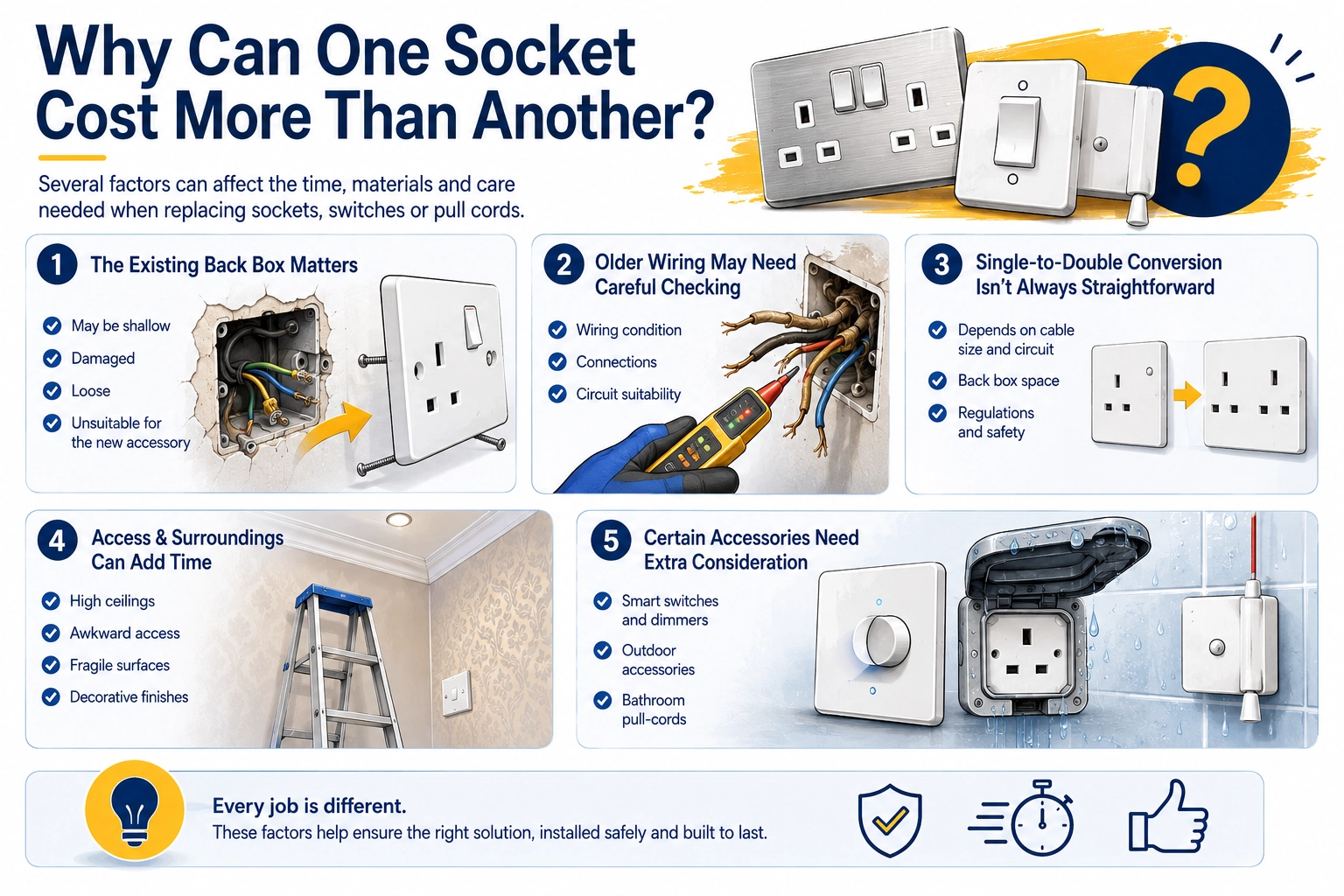
The wall box, cable length, terminal condition, earthing and previous workmanship decide whether the job stays simple. Two sockets can look almost identical from the front and take very different amounts of care.
Why do bathroom pull-cords fail so often?
Bathroom pull-cord switches are one of the most common small electrical items to fail because they get used every day and are operated mechanically. The cord can become grubby or frayed, but the important part is the switch mechanism above the ceiling plate.
A pull-cord replacement needs the right type of accessory for the job and location. It should not be treated as "just a string".
A failed pull-cord often looks like a tiny repair, but the real check is above the ceiling plate: cable condition, secure fixing, correct switch rating and whether the accessory is suitable for what it controls.
Why does the wall type matter?
The wall behind the accessory can make a small job quicker or slower. A socket in a plasterboard wall may sit in a dry-lining box with flexible lugs; if those lugs are damaged or the board has crumbled, the accessory may not secure neatly.
Decorative finishes matter too. Fresh plaster, tiled splashbacks, old brittle plastic pattresses, painted-over screws and slightly twisted back boxes can all affect how neat the finished job looks.
A white plastic switch on a plasterboard wall may be a quick neat replacement if the dry-lining box is sound. The same switch on an old masonry wall with a shallow or loose metal box may need more care before the finished plate sits flat.
What about earthing on metal faceplates and back boxes?
Earthing is one reason a socket or switch replacement should not be treated as a purely cosmetic swap. Metal faceplates generally require a reliable earth connection, and metal back boxes may need proper continuity.
The practical takeaway is simple: a metal switch, socket or decorative faceplate is not automatically suitable just because it physically fits. The existing wiring, earth continuity and accessory type need checking.
If you want a decorative metal accessory, mention it before the visit and send a photo of the existing switch or socket. The accessory still needs to be suitable; this is not something to guess from appearance alone.
Is replacing a socket or light switch notifiable work?
In England, some electrical work in dwellings is notifiable under Building Regulations Part P, while some minor work is not. Approved Document P explains the framework, and the Planning Portal gives further guidance on electrical work in the home.
For many ordinary like-for-like accessory replacements, Building Control notification is not normally required. But location, condition and scope matter, especially around bathrooms, outdoor electrics, new circuits, consumer units, damaged wiring and anything uncertain.
A like-for-like accessory replacement is often a minor job, but damaged wiring, outdoor work, new circuits, consumer unit work and anything uncertain should be treated with extra caution and referred to a suitably competent electrician.
Which areas does this help with?
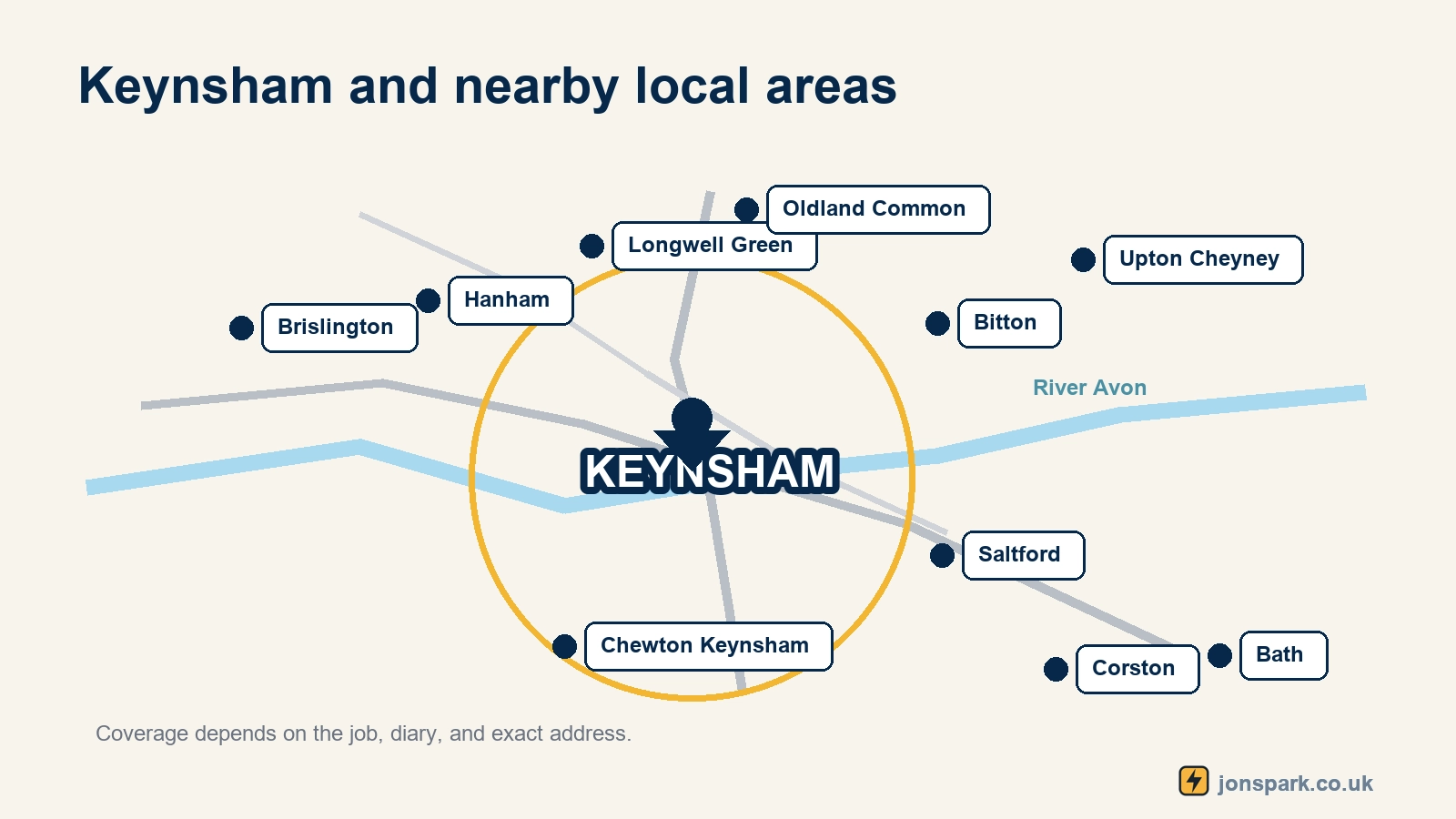
Jon Spark is based in Keynsham and focuses on minor domestic electrical work in Keynsham and nearby places such as Saltford, Brislington, Hanham, Longwell Green, Oldland Common, Bitton, Willsbridge and nearby Bath-side areas.
How do you get the best value from a small electrical visit?
The best value usually comes from preparing clearly. Send a postcode, a couple of photos, and a short list of what you want changed or fixed. Photos of the front of the accessory, the surrounding wall and any visible damage are especially useful.
- Group small jobs into one visit where possible.
- Say whether you already have the parts or need them supplied.
- Mention anything unusual, such as cracked accessories, burning smells, tripping circuits, buzzing, heat marks, damp or outdoor exposure.
- Be clear if the job is in a bathroom, kitchen, garden, garage or outbuilding.
- Ask early if you are not sure whether the job is a simple replacement or a bigger alteration.
When should you not treat it as a simple swap?
It is better not to treat the job as a simple swap if there are signs of overheating, cracking, arcing, buzzing, repeated tripping, damp, exposed conductors, DIY additions or damage around the accessory.
Jon Spark's published scope is deliberately focused: small domestic jobs, like-for-like replacements, single-to-double conversions where suitable, fan swaps, smoke and heat alarm replacements, light fittings and minor fault finding. If the job turns out to need a different route, the right answer is to say so.
Why trust this guide?
This guide is written by Jon Spark, a local sole trader focused on minor domestic electrical work in Keynsham and nearby areas. The article uses Jon Spark's published labour pricing, small-job experience and official public guidance as reference points.
The aim is to help you understand what affects a small-job quote, what information to send before booking, and when a job may need a different route.
FAQ
How much does it cost to replace one socket?
As a helpful estimate, a simple socket, switch, faceplate or similar fix may start from around £65 labour when it is the main job. Check current pricing or the estimator before booking.
Is it cheaper to replace several sockets at once?
Usually, yes. Grouping genuinely simple items into one visit can reduce the effective cost per item because travel, setup, checking and tidy-up time are shared.
Can a single socket be changed to a double socket?
Sometimes. A single-to-double conversion is only suitable where the existing wiring, circuit, back box or wall condition, and location allow it.
Do I need Building Control for replacing a light switch?
For many ordinary like-for-like small jobs, Building Control notification is not normally required in England. However, location and scope matter, especially around bathrooms, outdoor electrics, new circuits, consumer units and damaged wiring.
Can I supply my own socket or switch?
Often, but it needs to be suitable for the job and location. If Jon supplies parts, parts are charged separately with a 15% sourcing markup.
What should I send before asking for a quote?
Send your postcode, clear photos, what you want changed, whether you have the parts, and any concerns such as tripping, heat marks, damage, damp, buzzing or loose fittings.
Can I fit metal sockets or switches anywhere?
Not automatically. Metal faceplates need suitable earthing arrangements, and older lighting circuits or awkward back boxes can make this less straightforward than it looks.
Sources and useful links
- GOV.UK - Approved Document P: Electrical safety
- Planning Portal - Electrics
- Electrical Safety First - DIY and electrical safety
About Jon Spark
Jon Spark is the trading name of Jonathan Jensen, a sole trader providing minor domestic electrical work across Keynsham and nearby areas. The service focuses on practical small jobs such as socket and switch replacements, faceplates, light fittings, pull-cords, smoke and heat alarm replacements, extractor fan swaps and minor fault finding.
These Insights articles are written to help people understand common small electrical jobs before they book, including what information is useful to send and when a job may need a different route.
This article is for general information only. It is not DIY electrical instruction or a substitute for inspection by a suitably competent person. If you are unsure about electrical work, get suitable advice before opening accessories or touching wiring.
Need help with sockets, switches or faceplates?
Send a couple of photos, your postcode and a short description of what needs changing. I can usually tell whether it fits my small-job service and what the sensible next step is.